Smash Out: Cannon Fest 3D
Flare Star LLCCasual
3.98.00 Reviews
- Version
- 1.2.1
- Installs
- 100.00K
- Age Rating
- Everyone
Screenshots
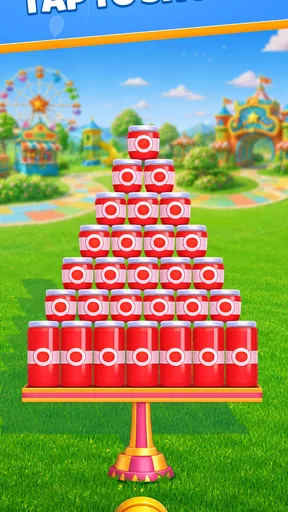
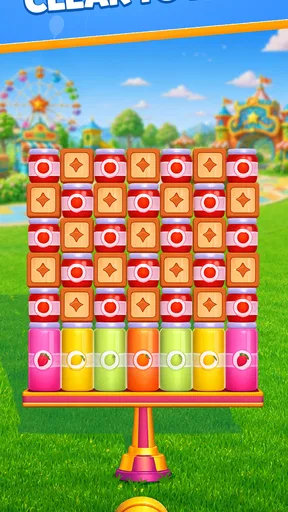
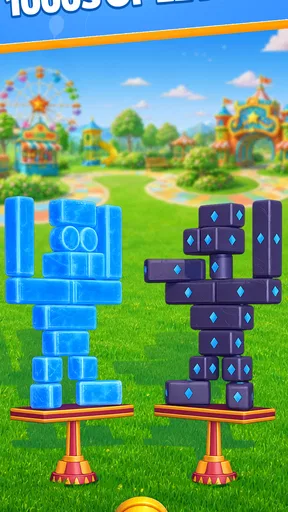
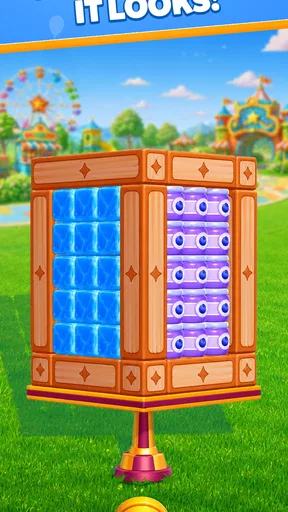
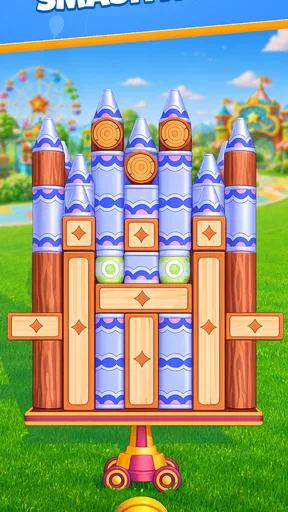
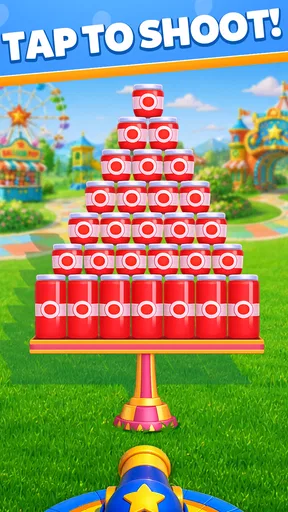
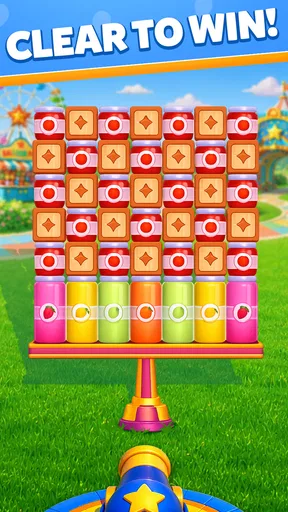
Our Review of Smash Out: Cannon Fest 3D
 Analysis by Appyee
I spent time with Smash Out: Cannon Fest 3D as a light, pick-up-and-play puzzle game, and my first impression was straightforward: it is built around quick decisions rather than long sessions of planning. You aim, break blocks, and look for reactions that clear more of the board than a single shot could manage. That basic loop makes it easy to understand within moments, while the challenge comes from making each launch count.
That simplicity is also the reason I can imagine recommending it to a friend who wants something casual for short breaks. It does not ask me to learn a large set of rules before playing. At the same time, it is not a perfect fit for everyone. Players looking for a deep campaign, a story, or a highly competitive multiplayer experience will probably find the design too focused and repetitive. For people who enjoy compact physics-style puzzles and the satisfaction of setting up a chain reaction, though, it has a clear appeal.
How the shooting puzzle loop feels in everyday play
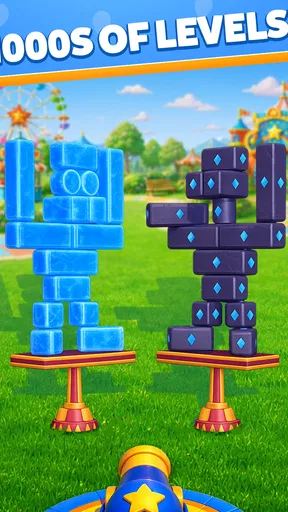
The central idea is easy to grasp: I use a cannon to blast blocks and try to create a more effective sequence of destruction. A careless shot may remove only part of the layout, while a better angle can start a reaction that reaches several targets. That gives each attempt a small tactical question: should I take the obvious hit now, or spend a moment searching for the position that produces a wider result?
I like that the game’s casual format makes this decision approachable. I can open it when I have only a few minutes, understand what needs doing, and begin immediately. It works well during a commute, while waiting for an appointment, or between larger tasks when I want something interactive but not mentally exhausting. The short-session character is more convincing than any promise of endless engagement because the basic action is so direct.
My most useful habit was to stop treating every visible block as an immediate target. The strongest move is often the one that changes the order in which objects are hit. I found it better to inspect the full arrangement first, identify where a reaction might travel, and only then commit. That small pause turns the experience from random tapping into a compact aiming puzzle.
Another practical tip is to judge a shot by its follow-through, not just by the first impact. A direct hit can look satisfying but still be inefficient if it leaves the remaining arrangement awkward. When I considered the likely path after the initial collision, I made fewer wasteful attempts. This is the kind of detail that is easy to miss in a short store summary but matters once the early novelty fades.
Speed expectations and the rhythm of a session
The game feels designed for immediate interaction rather than extended preparation. I do not need to build a character, manage a large inventory, or wait through a complicated setup before reaching the puzzle itself. That gives it a brisk perceived pace, especially when I am playing in small bursts.
Its speed is not only about how quickly a shot happens. It also comes from the limited mental overhead around each attempt. I can focus on the board, make a decision, and see the result without switching between several systems. For a casual game, that is a meaningful strength: the time spent playing feels more substantial than the time spent navigating.
There is a trade-off. Players who prefer a slower puzzle format with extensive planning may find the action too immediate, particularly if they enjoy studying a board for a long time before moving. Here, the pleasure comes from testing an idea and learning from the result. I would choose a more traditional logic game when I want deliberate, multi-step deduction rather than a quick cannon-based challenge.
In an everyday scenario, I would use it as a reset after a demanding task. A few attempts give me a clear objective without requiring the concentration of a full strategy game. I would not choose it as my only game for a long flight or a whole evening unless I already knew that its repeating shot-and-reaction loop suited me. Its natural home is the short break, not necessarily the marathon session.
What happens during heavier play
The most demanding moments are the layouts where several possible reactions compete for attention. These sections require more than simply aiming at the nearest block. I had to compare angles, think about the order of collisions, and accept that the visually largest target was not always the best first move.
Those moments make the game more interesting, but they also expose its main limitation: the underlying action remains narrow. Once I understood the general approach, the challenge depended heavily on the arrangement in front of me. If a player needs constant changes in rules or a broad range of mechanics, this focused structure may begin to feel familiar too quickly.
I also found that repeated attempts are most useful when I treat them as experiments. Rather than firing again with only a minor adjustment, I changed one part of the plan at a time: the starting angle, the intended first target, or the area where I expected the reaction to spread. That made failure informative instead of merely frustrating. It is a good way to get more value from the game without turning a casual session into a grind.
For heavy use, I would keep expectations realistic. The game’s appeal is the compactness of its puzzles, not a large collection of demanding systems running at once. The available information identifies it as a casual title, and that description matches my experience: it is easy to return to, but it is not trying to replace a full-scale action or strategy game.
Reliability, recovery, and the practical experience
From my perspective, the most important reliability question for a game like this is whether I can return to it without unnecessary friction. Its simple structure helps because there are fewer layers to manage between opening the game and taking a shot. That makes recovery from a short interruption feel more natural than it would in a game that depends on a long continuous session.
I would still approach it as a casual companion rather than a title where I expect a deep recovery system or elaborate progress management. The core value is in the individual puzzle attempt. If I am interrupted, the experience is easier to resume when I think of each board as a self-contained task instead of part of a lengthy narrative sequence.
That also affects how I judge mistakes. A missed shot is not a major setback in the way a failed mission might be in a larger game. I can reassess and try a different approach. This forgiving structure is one of the reasons I think the game is suitable for players who do not want pressure. It gives me room to experiment without making every error feel expensive.
There is a sensible distinction between reliability and enjoyment, however. A game can be easy to resume and still become repetitive if its central interaction does not hold attention. In my case, the chain-reaction idea remained enjoyable when I actively searched for better angles, but I would recommend trying the free version before considering any optional spending. That is the clearest way to decide whether the loop has enough variety for your habits.
Device constraints and what the technical profile suggests
The game is free to start, with optional in-app purchases listed from $1.99 to $99.99 per item. That range is important for families and for anyone who prefers a completely predictable entertainment budget. The content rating is Everyone, which makes the tone broadly accessible, but I would still keep purchase settings in mind when sharing a device with a child.
It supports devices running Android 6.0 or later, so compatibility depends on the operating system as well as the hardware. A newer operating system alone does not guarantee the same experience on every phone or tablet, especially when older hardware is involved. My practical advice is to close unnecessary background apps before a longer session on an aging device and to avoid judging the game solely by how a demanding 3D title performs on the same phone.
The three-dimensional presentation gives the simple block puzzles a more physical feel than a flat matching game, but that does not automatically make it a heavy resource user. I would describe the likely demand as tied more to its visual presentation and active effects than to complex management systems. Since the game is casual, I would expect it to make more sense for quick play than for leaving it open continuously in the background.
Battery expectations should also be practical. Any game with active animation can use more power than reading or messaging, so I would not select it when I need to conserve every bit of battery. For a short break, that trade-off is reasonable. For extended play away from a charger, a minimalist two-dimensional puzzle may be a better choice if battery life is your top priority.
How it compares with familiar casual alternatives
Compared with match-three games, this title puts more emphasis on aim, timing, and the order of destruction than on swapping pieces into patterns. That makes it a better choice for someone who wants a direct action on every turn. If you prefer collecting boosters, building long combos through color matching, or following a large progression map, a match-three alternative will probably offer more variety.
Compared with traditional physics puzzlers, the cannon-and-block concept feels more immediately readable. I can understand the objective without learning a complicated toolset. The compromise is that the experience may feel less expansive than a physics game with many different objects and mechanisms. I would choose this one when I want a clean, focused challenge, and another title when experimentation with a larger sandbox matters more.
It also differs from endless arcade games because success depends on solving the current arrangement rather than simply surviving for as long as possible. That gives the player a clearer stopping point. In my experience, this makes it easier to fit into a busy day, although it may not provide the same score-chasing excitement for people who enjoy chasing a personal best indefinitely.
The best audience is therefore fairly specific: casual players who like breaking targets, thinking about angles, and watching one good decision produce a larger reaction. I would skip it if you want a story-driven adventure, online competition, extensive customization, or a game that changes its identity every few minutes.
Ownership, audience, and the current package
Flare Star LLC is the developer behind the game. It is currently version 1.2.1, and the title has passed 100K installs. Its average rating is 3.9 from around 150 ratings, with a small number of written reviews. I read that as a sign of a game with a real audience but not one whose public feedback alone should decide whether it belongs on your device.
The free entry point is helpful because the central question is personal: do you enjoy repeating a compact cannon puzzle and improving your approach? You can answer that without paying first. The optional purchase range means I would be careful about spending until I had played enough to understand how often I would return and whether the available challenge justifies it.
The Everyone rating makes it approachable in terms of age suitability, but the right recommendation still depends on play style. For a child, I would pair access with purchase controls. For an adult who wants a quiet break, the uncomplicated objective is a plus. For a serious puzzle fan, I would describe it as a lighter companion rather than a main event.
The release date is Jul 17, 2026, so I would also keep the version number in mind when checking the app on a particular device. Updating through the normal store process is sensible, especially if a later release changes compatibility or smoothness. I would not promise identical performance across every phone because hardware, operating-system condition, and background workload can all affect a game’s feel.
My performance verdict
My overall view is positive but measured. Smash Out: Cannon Fest 3D works best when I treat it as a focused casual puzzle: open it quickly, study the arrangement, make a considered shot, and use the result to refine the next attempt. Its perceived speed is good for short sessions, its simple structure supports easy recovery after interruptions, and its three-dimensional presentation gives the block-breaking loop a little more impact than a purely flat design.
The weaknesses are equally clear. The core interaction can become familiar, heavy play is likely to test your patience before it tests your long-term strategy skills, and the optional purchase range deserves attention if you want strict control over spending. It is also not the right answer for players who need a campaign, multiplayer competition, or a broad set of mechanics.
My recommendation is to try it as a free, short-session game rather than commit to it as your main puzzle app. If you enjoy discovering the angle that turns one hit into a chain reaction, it can be a satisfying little time-filler. If you prefer deeper deduction or more varied progression, choose a fuller puzzle alternative instead. For the right player, its restraint is the attraction: the game gives me one clear problem, one shot to improve the situation, and a reason to try again when the first idea falls short.
Verdict
Strengths of Smash Out: Cannon Fest 3D
- Simple controls make it easy to start playing immediately.
- Short levels are convenient for quick gaming sessions.
- Colorful 3D visuals give the game a cheerful arcade feel.
- Satisfying cannon impacts make successful shots feel rewarding.
- Progressive challenges help maintain interest beyond the opening levels.
Limitations of Smash Out: Cannon Fest 3D
- Gameplay can become repetitive after extended play sessions.
- Some levels rely heavily on trial and error to find the right shot.
- Ads may interrupt the experience, especially between completed levels.
- Precision aiming can feel frustrating on smaller phone screens.
- The game offers limited depth for players seeking advanced strategy.
Similar Picks in This Category
View All
My Talking Angela
Outfit7 Limited4.2

My Talking Tom
Outfit7 Limited4.3

Pou
Zakeh4.2

My Talking Tom 2: Pet Game
Outfit7 Limited4.3

Candy Crush Saga
King4.6

Bridge Race
Supersonic Studios LTD4.1
Frequently Asked Questions
What is Smash Out: Cannon Fest 3D?
Smash Out: Cannon Fest 3D is a casual arcade game centered on firing cannonballs at targets, structures, and obstacles in colorful 3D levels. The main objective is to aim carefully, release shots at the right moment, and cause as much destruction as possible while completing each stage. Its simple controls make it easy to start, although later levels may require more accurate timing and planning.
How do you play Smash Out: Cannon Fest 3D?
Gameplay is generally straightforward: players adjust the cannon’s direction or firing angle, then tap or release to launch a projectile. You must use limited shots efficiently, hit important targets, and sometimes take advantage of explosive objects or environmental features. Although the controls are accessible for beginners, completing levels with better results depends on observing the layout and choosing the most effective firing sequence.
Is Smash Out: Cannon Fest 3D free to download and play?
Smash Out: Cannon Fest 3D can typically be downloaded without an upfront purchase, allowing users to try the core levels and cannon-based challenges for free. However, free mobile games may include advertising, optional purchases, or other monetized elements. Before downloading, check the current Google Play Store or App Store listing because availability, advertisements, and in-app purchase details can change with updates.
Does Smash Out: Cannon Fest 3D require an internet connection?
The basic arcade experience may be playable offline after the necessary game files have been installed, which is convenient for short sessions while traveling or when mobile data is unavailable. Nevertheless, an internet connection may be needed for advertisements, analytics, updates, cloud features, or restoring purchases. It is best to launch the game once online before relying on it as a completely offline title.
Is Smash Out: Cannon Fest 3D suitable for children?
Smash Out: Cannon Fest 3D is designed around cartoon-style cannon action and object destruction rather than realistic combat, so it may appeal to children and casual players. Even so, parents should review the age rating, advertising content, and in-app purchase settings on the relevant store. Younger players may also benefit from supervision, particularly if the game displays third-party ads or offers optional purchases.
Play our best games!


